
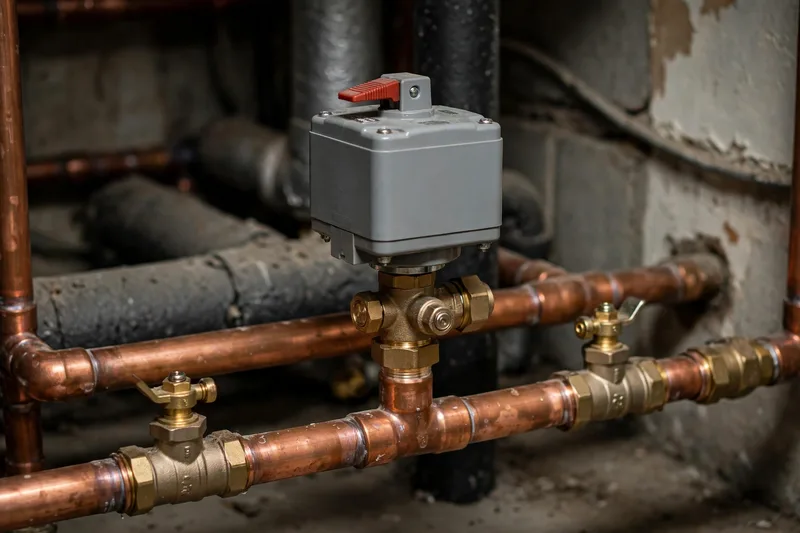
A zone valve that sticks open overheats one area; a valve stuck closed leaves it cold. Here is how to tell which one you are dealing with.
Stuck open means heat you cannot stop. Stuck closed means heat you cannot get. The symptoms point in opposite directions, which makes them easier to identify than most heating faults.
Short answer
A zone valve stuck open lets hot water flow even when the thermostat is satisfied, so that zone overheats — rooms get too warm, the boiler may short-cycle, and fuel bills climb. A valve stuck closed blocks flow entirely, so the zone never heats no matter what the thermostat calls for. Both failures live in the same small device, but they feel like opposite problems.
Either way, the fix starts with confirming which failure you have, because the repair path differs. A provider tests the valve's response to a thermostat call, checks whether the actuator is receiving power, and inspects the valve body for mechanical binding.
Symptoms of a valve stuck open
The classic sign is a zone that will not cool down. You set the thermostat to 68 and the room sits at 76. Turning the thermostat down — or even off — changes nothing. In some cases the overheating zone keeps calling the boiler, which then short-cycles as it satisfies the rest of the system quickly while the stuck zone keeps dumping heat.
Other clues include radiators or baseboards that stay hot around the clock, one floor noticeably warmer than the rest of the house, and a heating bill that jumps without a change in weather. If the overheating is severe, the room can become genuinely uncomfortable, which is when most homeowners start looking for answers.
Symptoms of a valve stuck closed
This one is simpler to spot: the zone never heats. The thermostat calls, you may hear it click, but the radiators or baseboards in that zone stay cold. The boiler itself may run normally — other zones heat fine — which is actually a useful diagnostic clue. When one zone is dead while the rest of the system works, the problem is almost always in that zone's controls, valve, or piping rather than the boiler.
Sometimes a valve sticks partway, giving weak or intermittent heat. The zone warms slowly, never quite reaches temperature, or heats on some days and not others. Partial sticking is common in older valves where scale or corrosion builds up inside the valve body over years of Medford heating seasons.
Why zone valves stick
Most zone valves combine an electric actuator (the motor head) with a mechanical valve body. Either half can fail. Actuator motors wear out, gears strip, and internal switches fail. Valve bodies corrode, collect scale, or seize after long idle periods — a valve that sat all summer is more likely to stick on the first cold snap.
Medford's older housing stock means many systems still run on original valves that are decades old. Age alone is a common cause. Water quality matters too: systems with sludge or corrosion debris put extra strain on the moving parts inside the valve.
What a provider checks
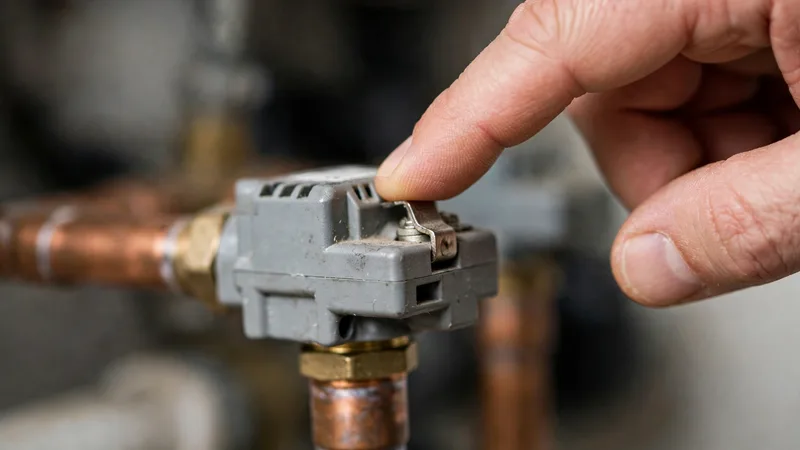
Diagnosis follows the signal path. First, the provider confirms the thermostat is actually calling for heat (or not, in the stuck-open case). Then they check whether the actuator is receiving power and whether the valve stem moves when it should. The manual lever — the small override tab on most valve heads — gives a quick mechanical read: if the lever moves freely but the valve does not respond electrically, the actuator is suspect; if the lever itself is jammed, the valve body is the problem.
The end switch matters too. Many zone valves signal the boiler or circulator through an end switch that closes when the valve opens. A failed end switch can leave the boiler unaware that a zone is calling, which mimics a stuck-closed valve even when the valve itself moves fine.
What not to do
Do not force a stuck lever with pliers — you can snap the internal linkage and turn a repairable valve into a replacement. Do not leave the manual lever locked open as a permanent workaround for a stuck-closed valve; it defeats the zoning, overheats the area, and masks the underlying fault. And do not open electrical control boxes unless you are qualified: zone valve circuits can carry line voltage.
If a zone is severely overheating, you can turn the thermostat down and, if the system allows, close the service valves for that loop as a temporary measure — then describe what you found when you call.
Related service pages
For professional diagnosis, see zone valve repair in Medford. If the whole system has circulation trouble rather than a single zone, read about boiler circulator pump problems, or start with the broader zone valve and circulation problems guide. A provider handling zone valve repair in Medford will confirm whether the actuator, the valve body, or the controls are at fault before recommending a repair.
For the full range of heating guides, see the Boiler Repair Pro homepage.