A pilot light that will not stay lit is one of the most common boiler complaints in Medford homes.
Six specific faults cause most repeat pilot outages — and the pattern of the failure usually points to which one.
Short answer
A pilot light that keeps going out is usually caused by a failing thermocouple, a draft disturbing the flame, a dirty pilot orifice, an interrupted gas supply, a faulty gas valve, or flue downdraft. The pattern matters: a pilot that dies the moment you release the knob points to the thermocouple, while one that blows out on windy days points to a draft.
1. Failing thermocouple
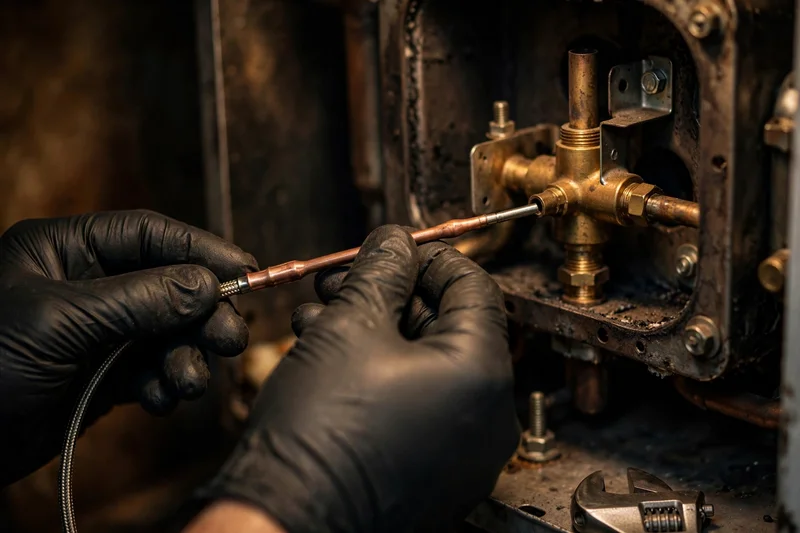
The thermocouple is a small safety sensor that sits in the pilot flame. Its job is to prove the flame exists — if it cools, it shuts off gas to the pilot as a safety measure. When a thermocouple weakens with age, it stops generating enough signal even though the flame is fine, so the gas valve closes and the pilot dies. This is the single most common cause of a pilot that lights but will not stay lit. For more detail, see our guide to pilot light and ignition repair in Medford.
2. Drafts blowing out the flame
Pilot flames are small and vulnerable. A basement window cracked open, a door that does not seal, or air movement from a nearby dryer vent can disturb the flame enough to lift it off the thermocouple or extinguish it. If outages line up with windy weather or coincide with a door or window being opened, a draft is the likely culprit.
3. Dirty or blocked pilot orifice
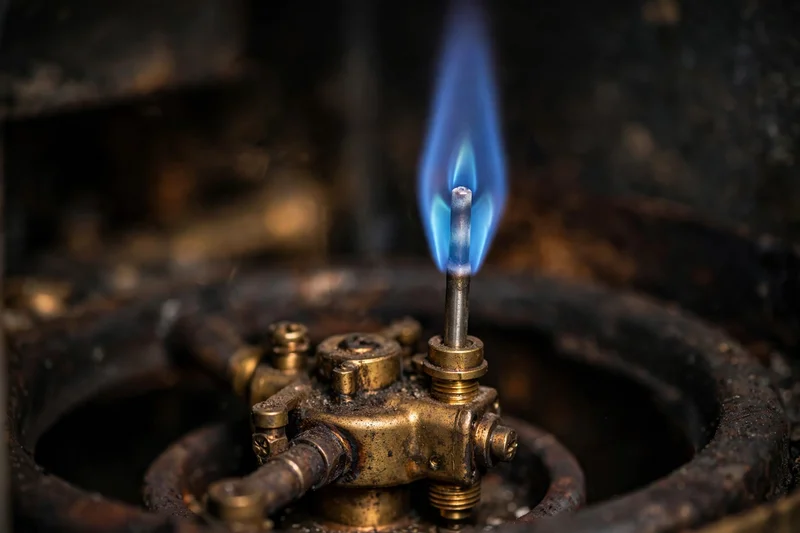
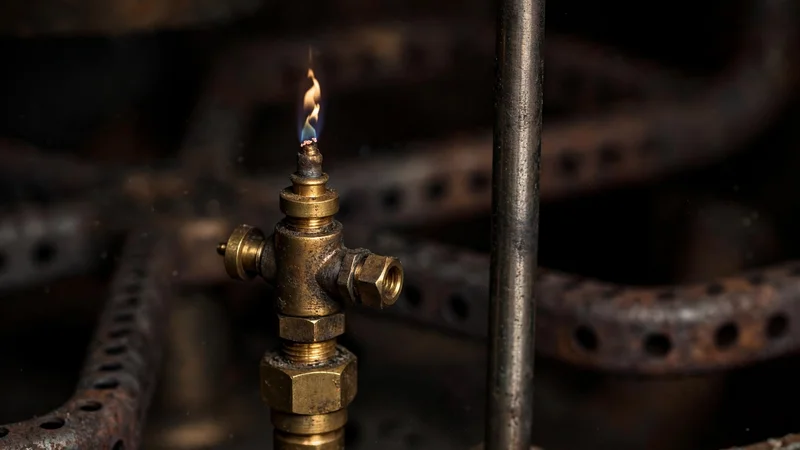
The pilot orifice is a tiny opening that meters gas to the pilot flame. Dust, rust particles, and spider webs — remarkably common in basement boiler rooms — can partially block it, producing a weak, yellowish, or lifting flame that cannot reliably heat the thermocouple. A weak flame is the visual clue: a healthy pilot burns blue and wraps firmly around the thermocouple tip.
4. Interrupted gas supply
If gas pressure to the boiler drops or stops, the pilot cannot survive. Check whether other gas appliances in the home are working. A recently closed service valve, utility work in the street, or an empty propane tank (for LP systems) can all interrupt supply. Never attempt to adjust gas piping or regulators yourself.
5. Faulty gas valve
The gas valve controls flow to both the pilot and the main burner. Internal wear can prevent it from holding the pilot circuit open even when the thermocouple is good. Gas valve faults tend to produce a pilot that lights normally and then drops out after seconds or minutes, with no draft or dirt to explain it. Gas valve work is strictly a job for a qualified provider.
6. Flue downdraft or venting problem
A downdraft pushes air down the flue and into the combustion chamber, disturbing or extinguishing the pilot. This often happens in high winds, with a damaged flue cap, or when a powerful exhaust fan elsewhere in the house creates negative pressure. Repeated outages during storms are the signature pattern.
What you can check safely
Look, do not touch. Note the flame color (blue is normal; yellow suggests a dirty orifice), whether outages follow a pattern (wind, time of day), and whether other gas appliances work. Make sure the area around the boiler is clear and that no new drafts have been introduced. Do not disassemble the pilot assembly, adjust gas components, or bypass safety controls.
When to call a provider
Call if the pilot will not stay lit after one careful relight attempt, if you smell gas at any point, if the flame burns yellow, or if outages keep recurring. Describe the pattern — when it goes out, what the flame looks like, and what you have observed. That detail lets the provider arrive with the likely parts on hand. For professional diagnosis, see pilot light and ignition repair in Medford.
What happens if you keep relighting without fixing the cause
Relighting a pilot that keeps dying treats the symptom, not the fault — and the underlying problem does not stay static. A weakening thermocouple continues to degrade until the pilot will not hold at all, which usually happens on the coldest night of the year. A dirty pilot orifice accumulates more debris over time, and the flame grows progressively weaker. A draft problem can worsen as seasons change and wind patterns shift.
There is also a practical cost to delay: each failed ignition cycle stresses the gas valve, and repeated manual relighting attempts increase the chance of a mistake — such as not waiting the full cool-down period the manufacturer specifies between attempts. If you have relit the same pilot more than twice in a week, the pattern has told you everything it can. The next step is diagnosis, not another match. A provider can typically identify which of the six causes applies within a single visit, because the failure pattern you describe narrows it before any tools come out.
Related service pages
For the full service, see pilot light and ignition repair in Medford. Related reading: gas and combi boiler repair and boiler clicking but not firing.
For the full range of heating guides, see the Boiler Repair Pro homepage.