
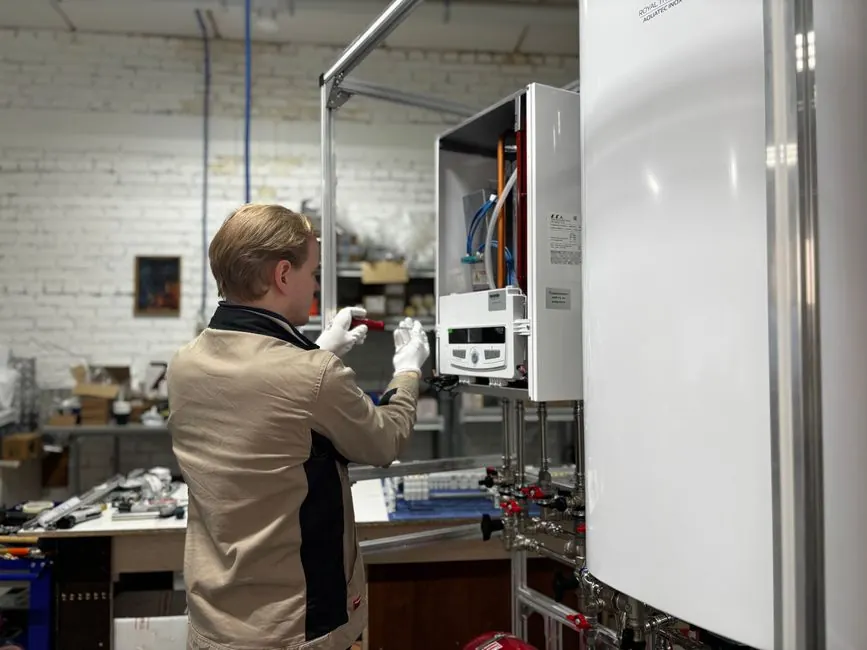
Practical observation and servicing guidance for boiler owners, with clear limits on do-it-yourself work.
Use the guidance for your exact model
Boilers differ by fuel, design, and whether they supply steam or hot water. Keep the manufacturer’s operating instructions and follow the recommended maintenance schedule. Do not apply a generic pressure range or maintenance procedure to an unfamiliar system.
Keep a useful record
Note service dates, previous repairs, fault codes, and changes in performance. From a safe position, observe visible leaks or unusual sounds. Photograph the display or model label only if you can do so without opening the casing or entering an unsafe area.
Make room for servicing
Keep normal access to the appliance clear and do not cover ventilation openings. Leave cleaning, combustion adjustments, internal inspections, and safety-control tests to a suitably qualified provider. Ask what a scheduled service includes for your particular boiler.
Watch for changes in heating
Rooms that stay cold, longer heating cycles, and repeated shutdowns are useful symptoms to report. Read about radiator and baseboard problems if only part of the property is affected. Avoid bleeding, topping up, or resetting an unfamiliar system without appropriate instructions.
Do not assume every system needs flushing
Poor circulation can have several causes. Ask a provider to assess system condition and suitability before approving maintenance or power flushing. Cleaning may be inappropriate for some systems and is not a substitute for diagnosing the actual fault.
When to request help
Arrange professional assessment for recurring faults, new leaks, or noticeable changes in operation. Report what you observed and when it started. Our service guide can help you describe the problem before you request help.